Case study - III
Cloudhands
"Can he structure complexity?"
From Models to Outcomes: Designing a Unified AI Experience
Leading design for a 0→1 multi-modal AI platform that unified image, video, audio, text, and code generation into a single guided workflow.
Role
Head of Design
Team
Product, Engineering, PM
Timeline
2025
Focus
AI UX, multi-modal workflows, 0→1
Outcome
Fragmented tools → unified platform in beta
01 - Context
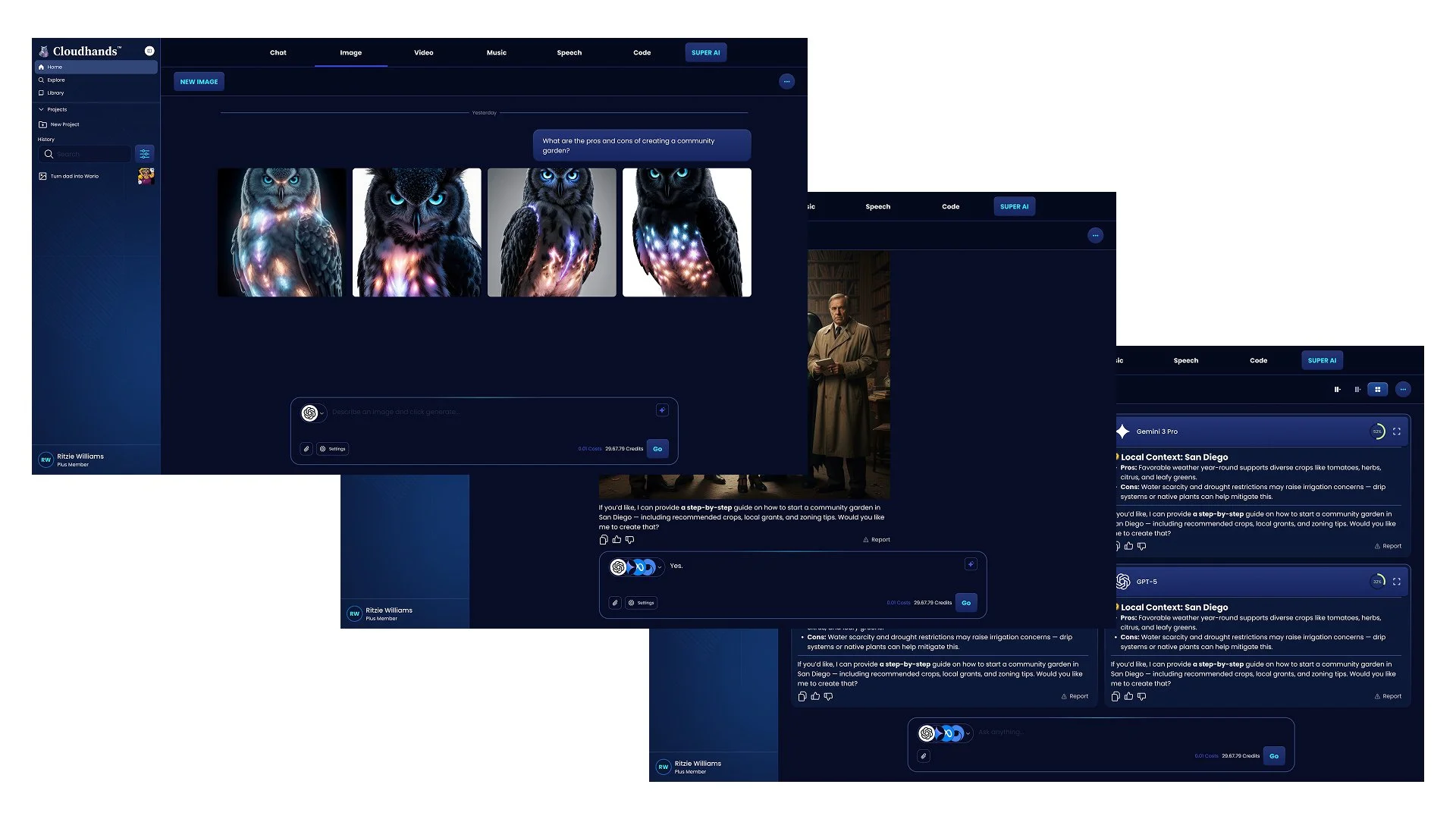
Cloudhands is a multi-modal AI platform designed to simplify how users interact with AI tools.
Instead of navigating separate products for text, images, video, and code, the platform brings everything into a single, unified experience, enabling users to focus on outcomes rather than underlying models.
02 - The Problem
AI capabilities are powerful but fragmented.
Users often need:
Multiple tools
Multiple subscriptions
Different interaction patterns
To accomplish even simple tasks, users must understand which model to use and how to use it—creating unnecessary complexity.
03 - Key Insight
Users don’t care about models—they care about outcomes.
This insight reframed the product from a collection of tools into a cohesive system designed around user intent.
04 - Exploration
Early design exploration focused on how to unify diverse AI capabilities into a single, understandable experience.
Key questions included:
Should the experience be tool-based or intent-based?
How much should users control vs. automate?
Can different modalities share a common interaction model?
05 - Core System
The platform evolved into a multi-layered system that balances flexibility and consistency:
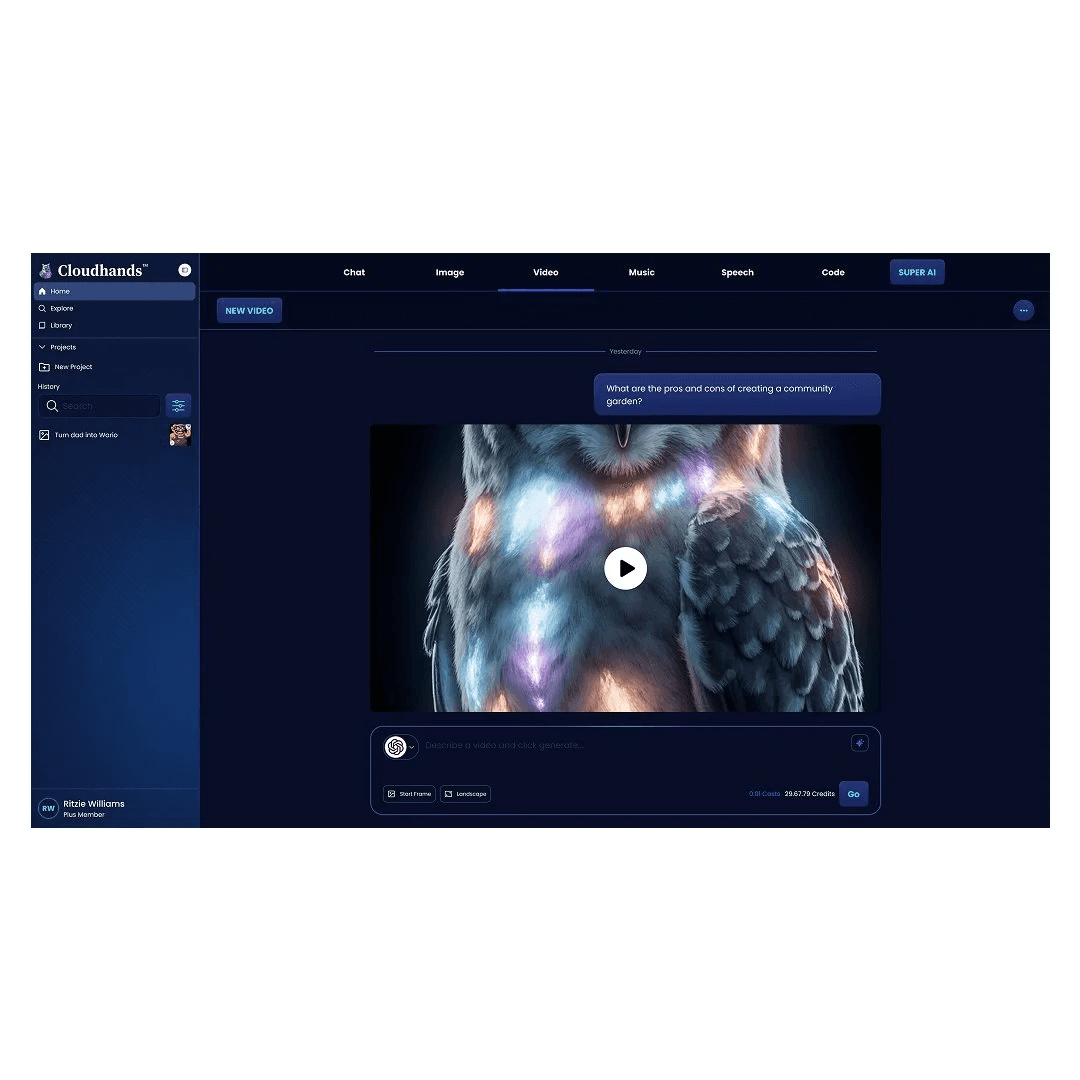
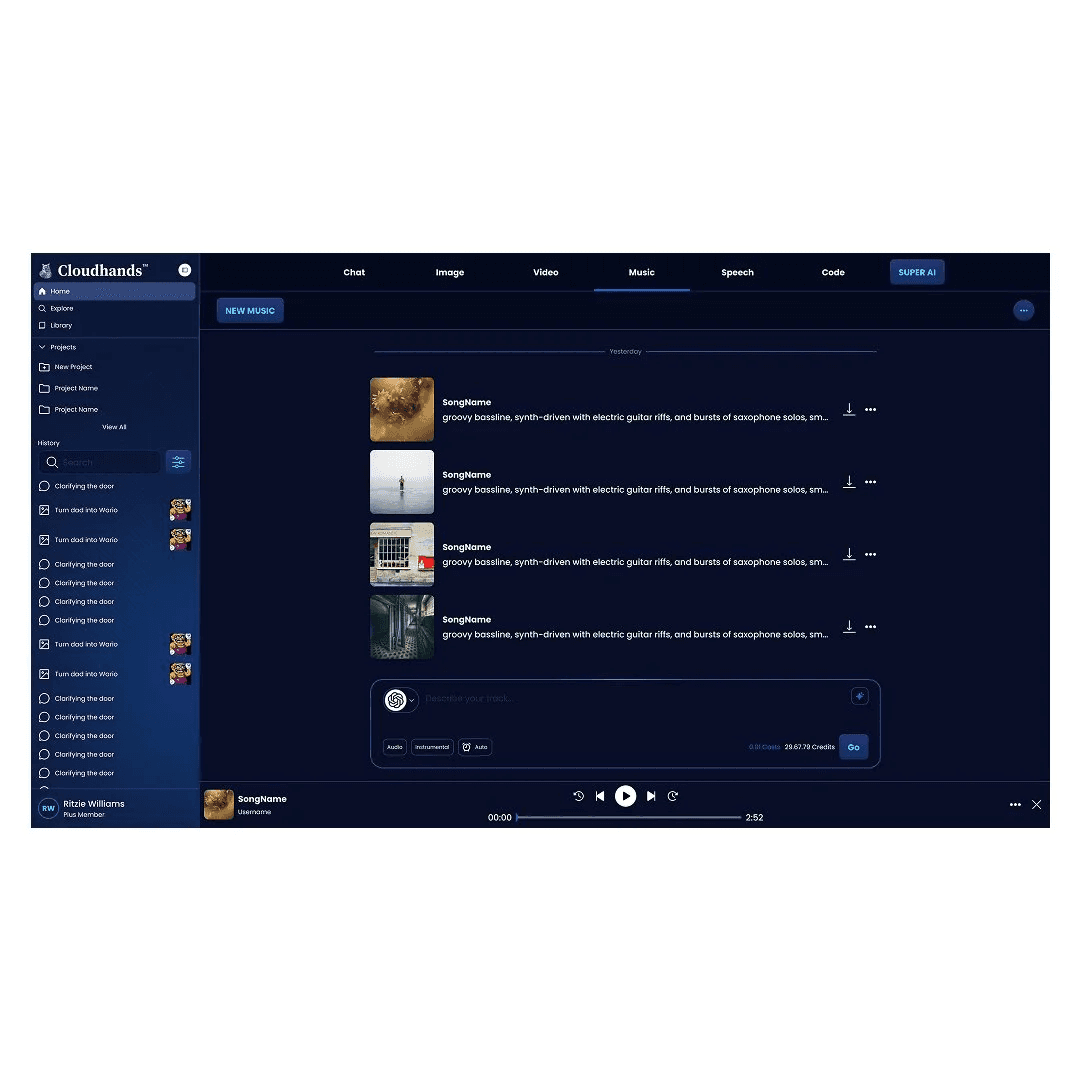
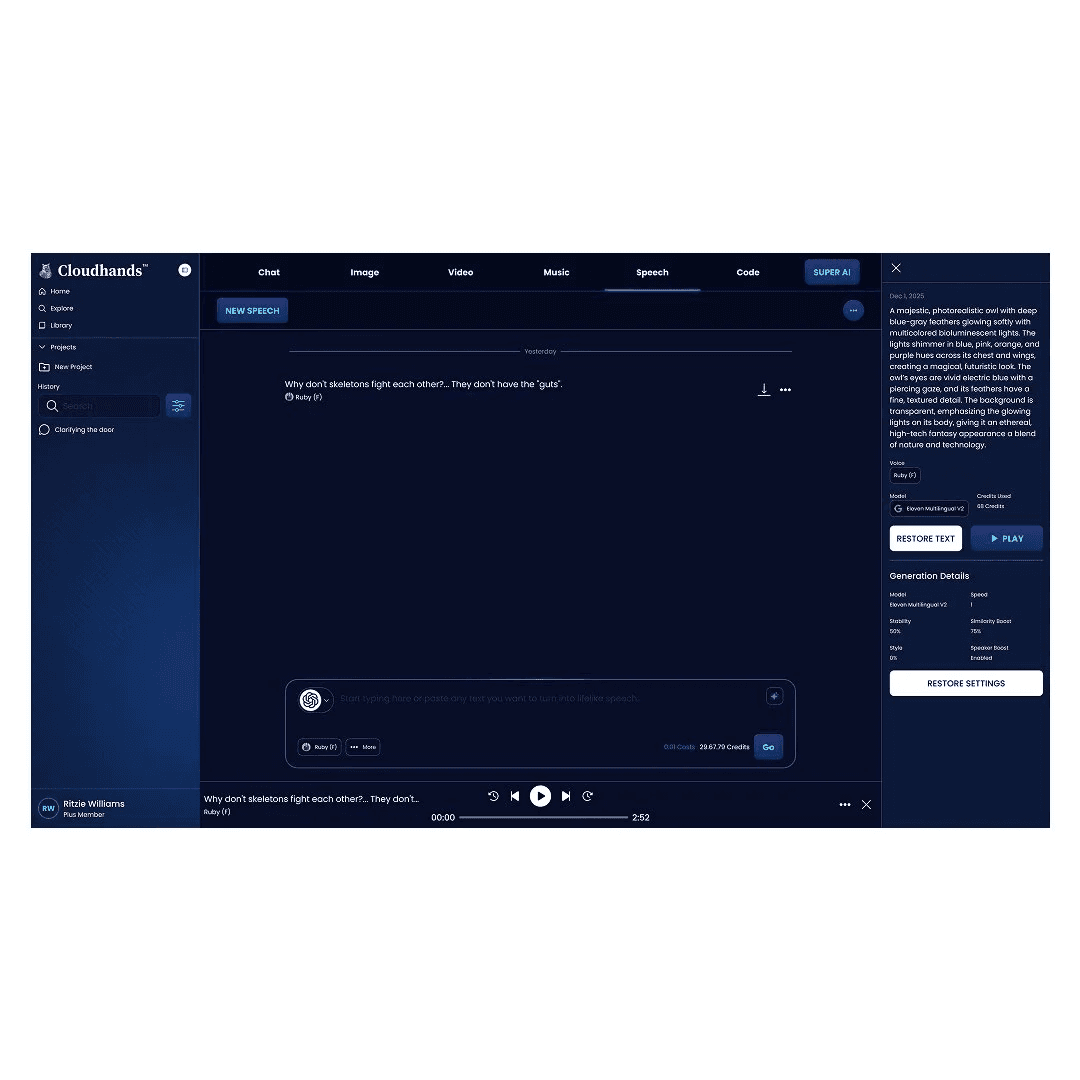
Multi-Modal Generation
Chat
Image
Speech
Audio
Code
All generation types were designed to feel cohesive while supporting their unique outputs.

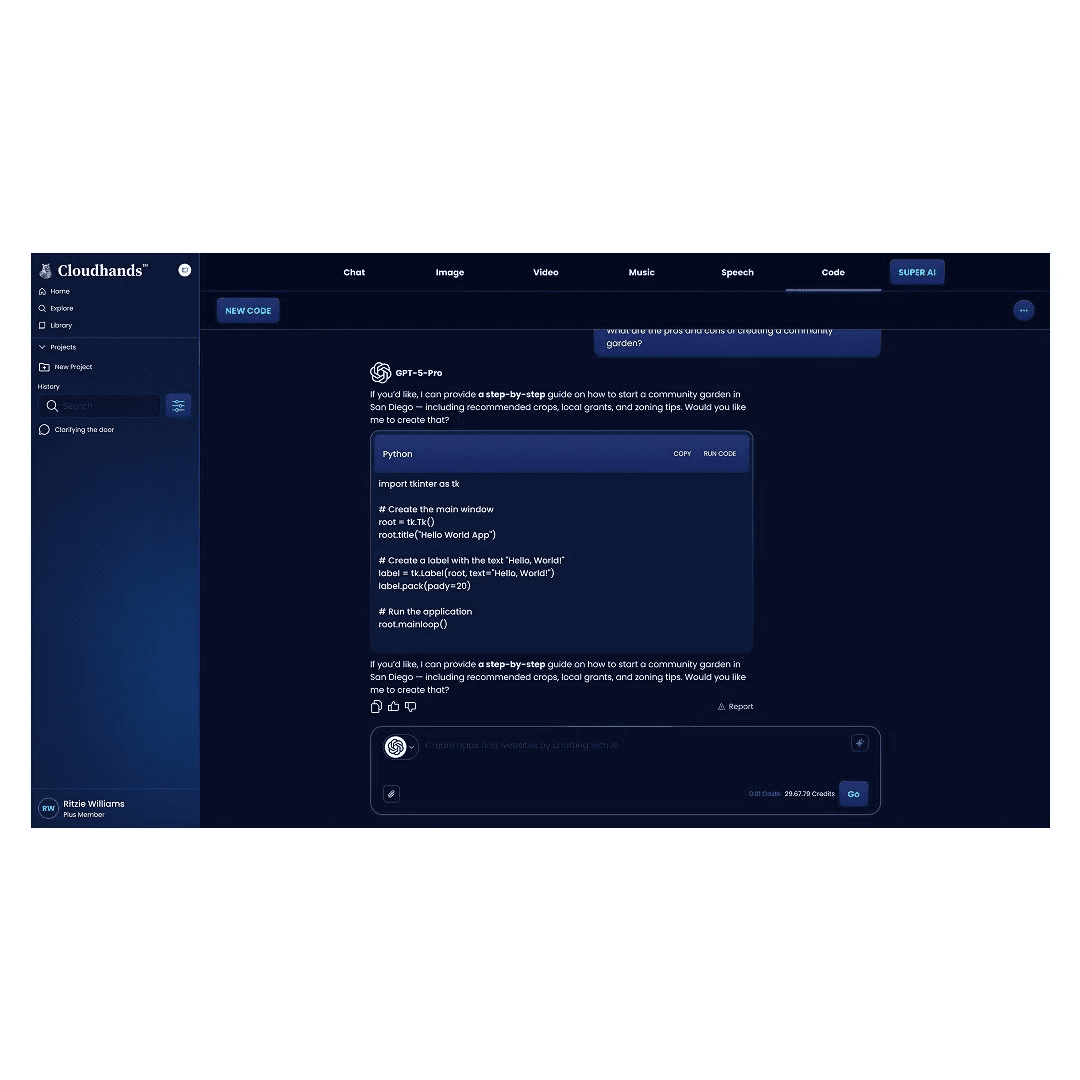
Assistant Layer
A conversational interface that acts as a central entry point for interacting with different capabilities.


Recipes System
v1: Pre-filled prompts for quick access
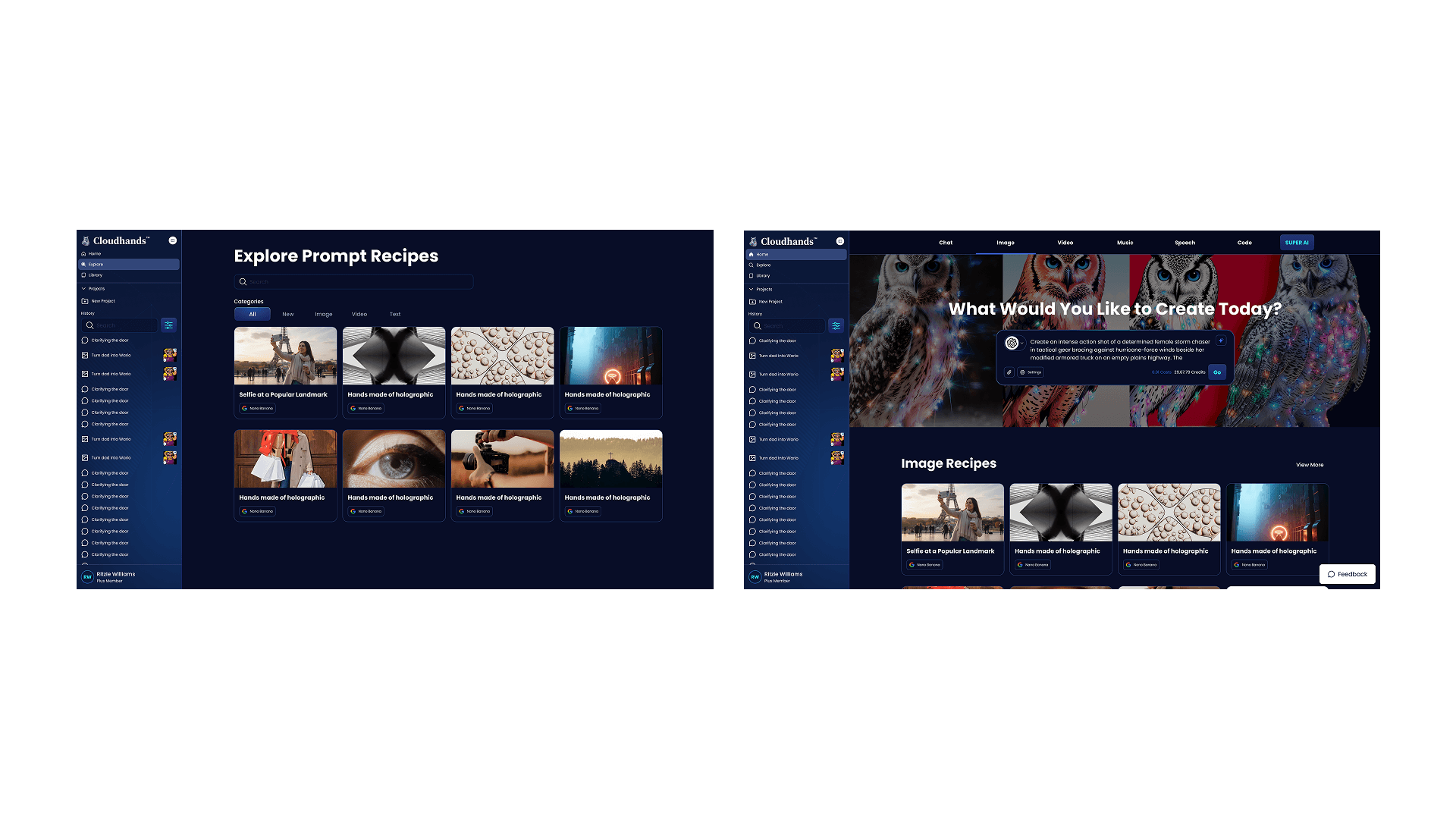
v2: Structured forms for guided generation
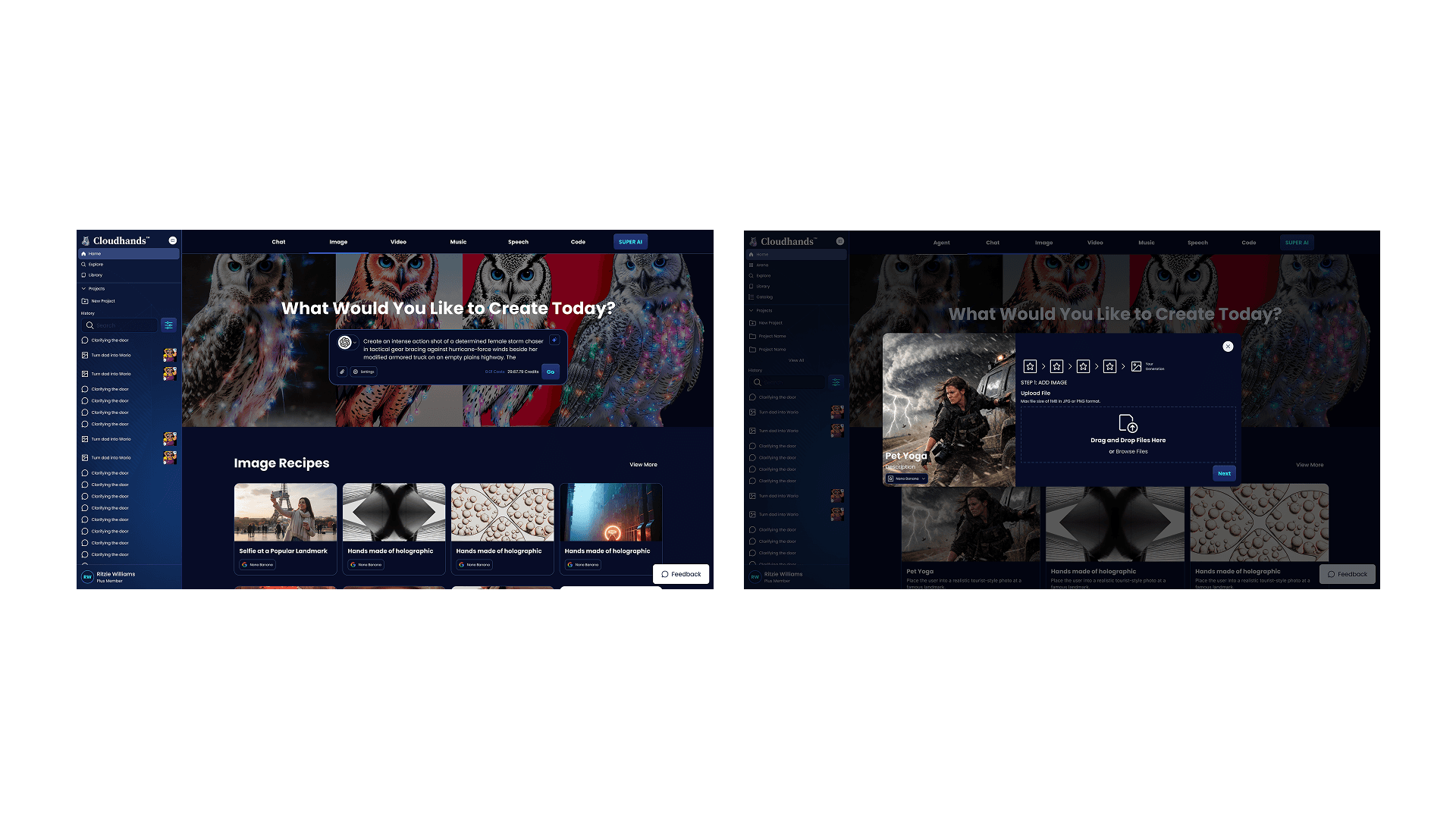
This allowed users to move from exploration to repeatable workflows.
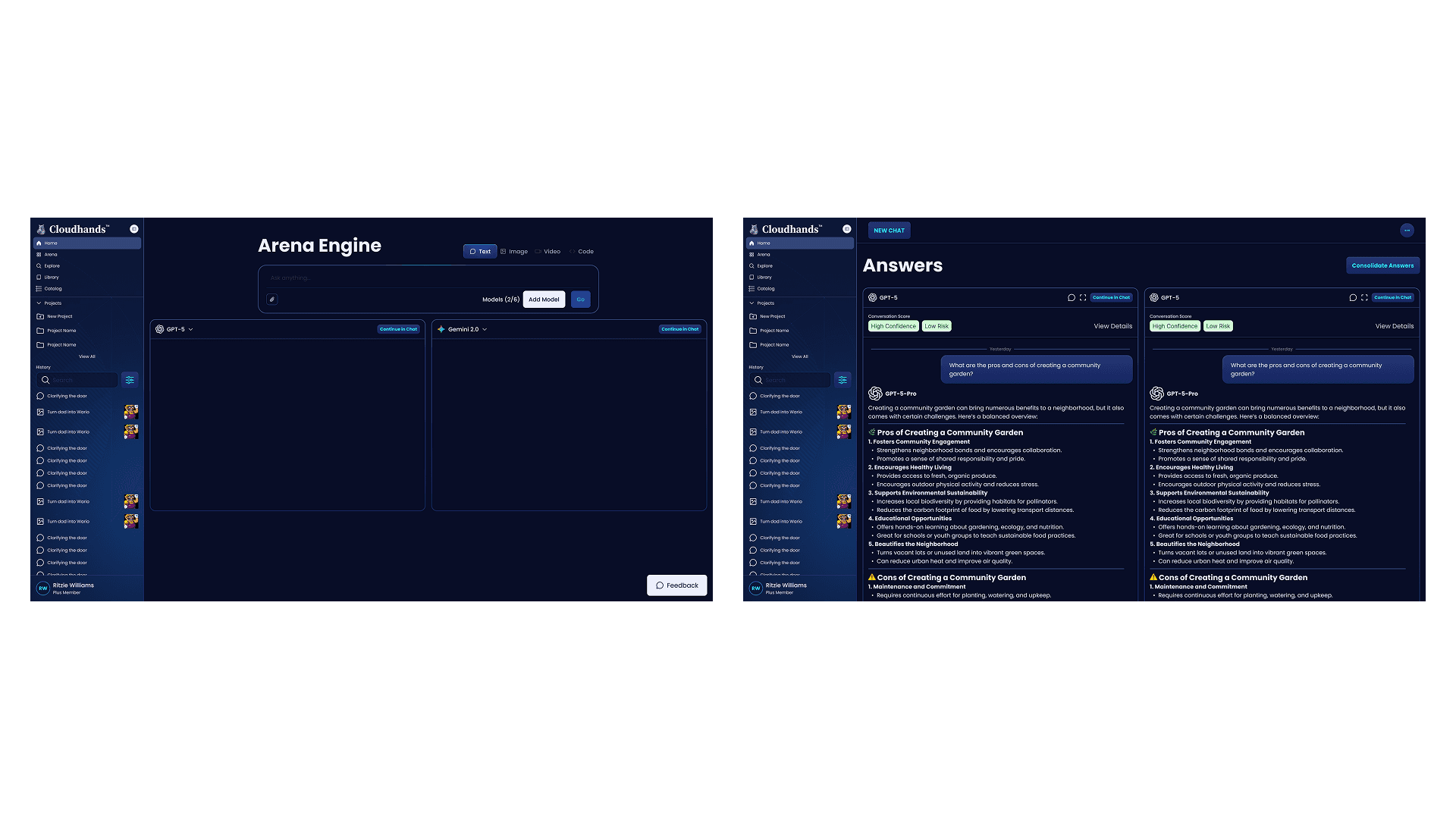
Model Comparison (Arena)
A feature enabling users to compare outputs across different models, helping them understand tradeoffs without requiring deep technical knowledge.
06 - concept Exploration
One of the biggest challenges was designing across multiple modalities without fragmenting the experience.
We explored:
Dedicated interfaces per tool vs. shared layouts
Prompt-first vs. guided workflows
Flexible vs. structured input systems
This led to a hybrid approach that balances consistency for usability with flexibility for power users.
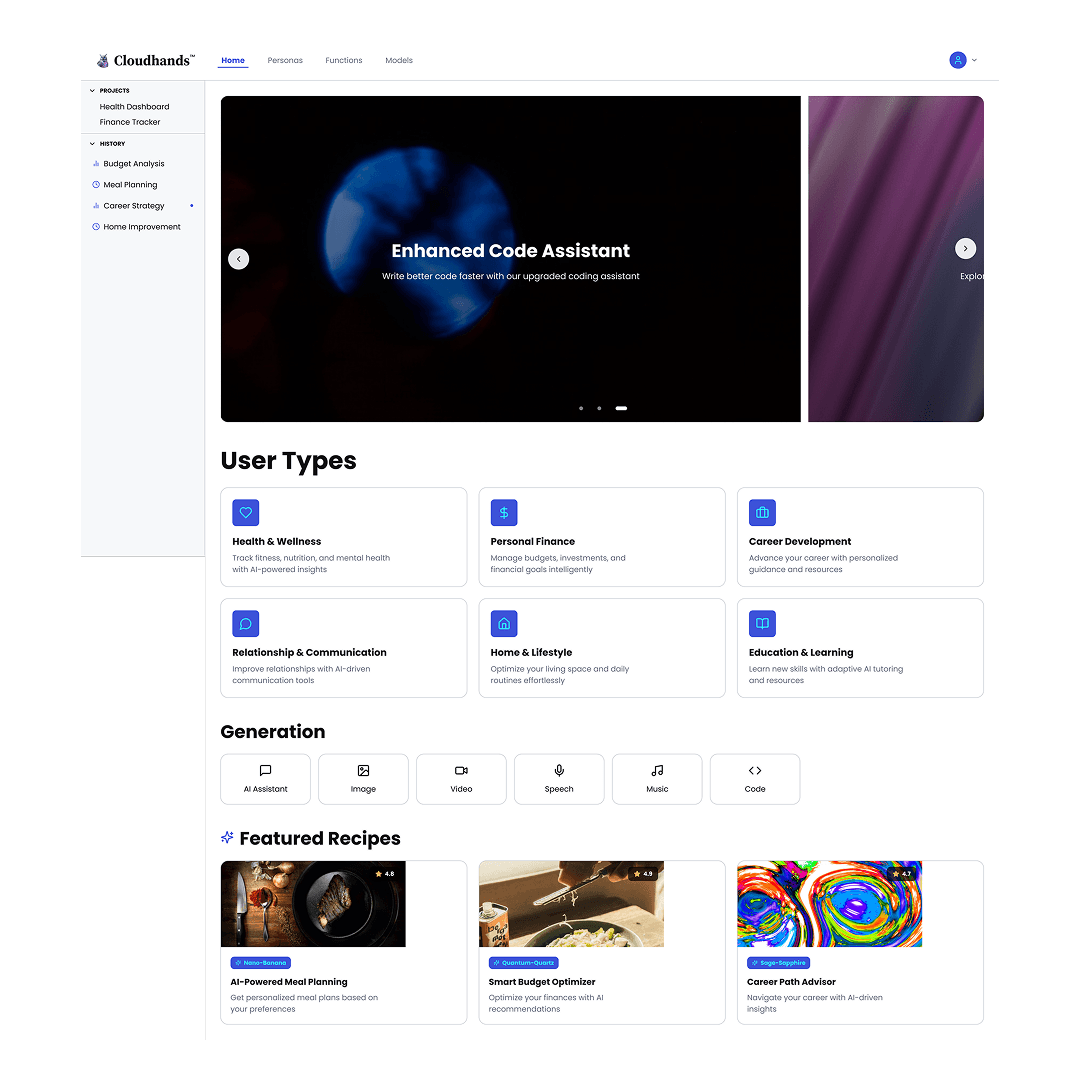
Expanding Beyond Tools
Future directions explored extending the platform into domain-specific applications:
Health & wellness
Personal finance
Career development
Relationships & communication
Home & lifestyle
Education
This shifts the platform from a tool aggregator to an AI-powered life operating system.
Multi-Step Intelligence
Another direction explored multi-step prompts—where outputs from one action feed into the next—enabling more complex workflows and automation.
07 - Tradeoffs
Innovation vs. Speed
To move quickly, we prioritized consistency across experiences rather than building fully specialized interfaces for each modality.
Benefit: Faster development and easier scalability
Tradeoff: Less tailored experiences for specific use cases
Feature Expansion vs. Deep Insight
We focused heavily on expanding capabilities to differentiate the product.
Benefit: Broader feature set and competitive positioning
Tradeoff: Less time spent deeply analyzing user behavior and optimizing core flows
08 - Outcome
Cloudhands reached beta as a unified AI platform capable of supporting multiple modalities within a single system.
The product successfully demonstrated how a cohesive experience can reduce friction and make AI tools more accessible, even in a rapidly evolving space.
09 - Whats Next
Future iterations focus on increasing intelligence and automation:
More personalized AI workflows
Smarter orchestration across tools
Autonomous multi-step task execution
The long-term vision is to evolve from a unified interface into a proactive, intelligent system that anticipates user needs.
10 - What i'd do differently
Reflecting on the process, there are several areas I would approach differently to strengthen both product direction and outcomes:
Lead with data earlier
Begin with deeper user conversations and behavioral insights to ground decisions in real user needs rather than assumptions.
Define clearer testing expectations
Establish upfront timelines and success criteria for experiments to ensure we gather meaningful data before making directional decisions.
Narrow the MVP scope
Focus on a smaller set of high-impact features to validate core value more quickly, rather than expanding feature breadth early in the product lifecycle.