Case study - I
chapterit
"Can he handle AI / future products?"
Designing with uncertainty.
A digital scrapbook for athletes, teams, and families to capture the full story of a sports journey through chapters, moments, events, stats, goals, and milestones.
Role
Founding Product Designer
Team
1PM, 2 ML Engineers, 1 Full-stack
Timeline
2026 - present
Focus
AI UX, ambiguous product definition
Outcome
Private beta → paid pilot in 4 months

01 - Context
ChapterIt is a digital platform designed to help athletes capture, structure, and reflect on their journey over time.
Rather than focusing solely on performance metrics, the product reframes athlete development as a combination of performance and narrative—bringing together stats, milestones, and personal moments into a single, cohesive system.
02 - My Role
Head of Product & Design
Defined product vision and MVP scope
Led roadmap planning and feature prioritization
Designed core user flows and system architecture
Built high-fidelity product experiences using AI-assisted development (Claude Code)

03 - The Problem
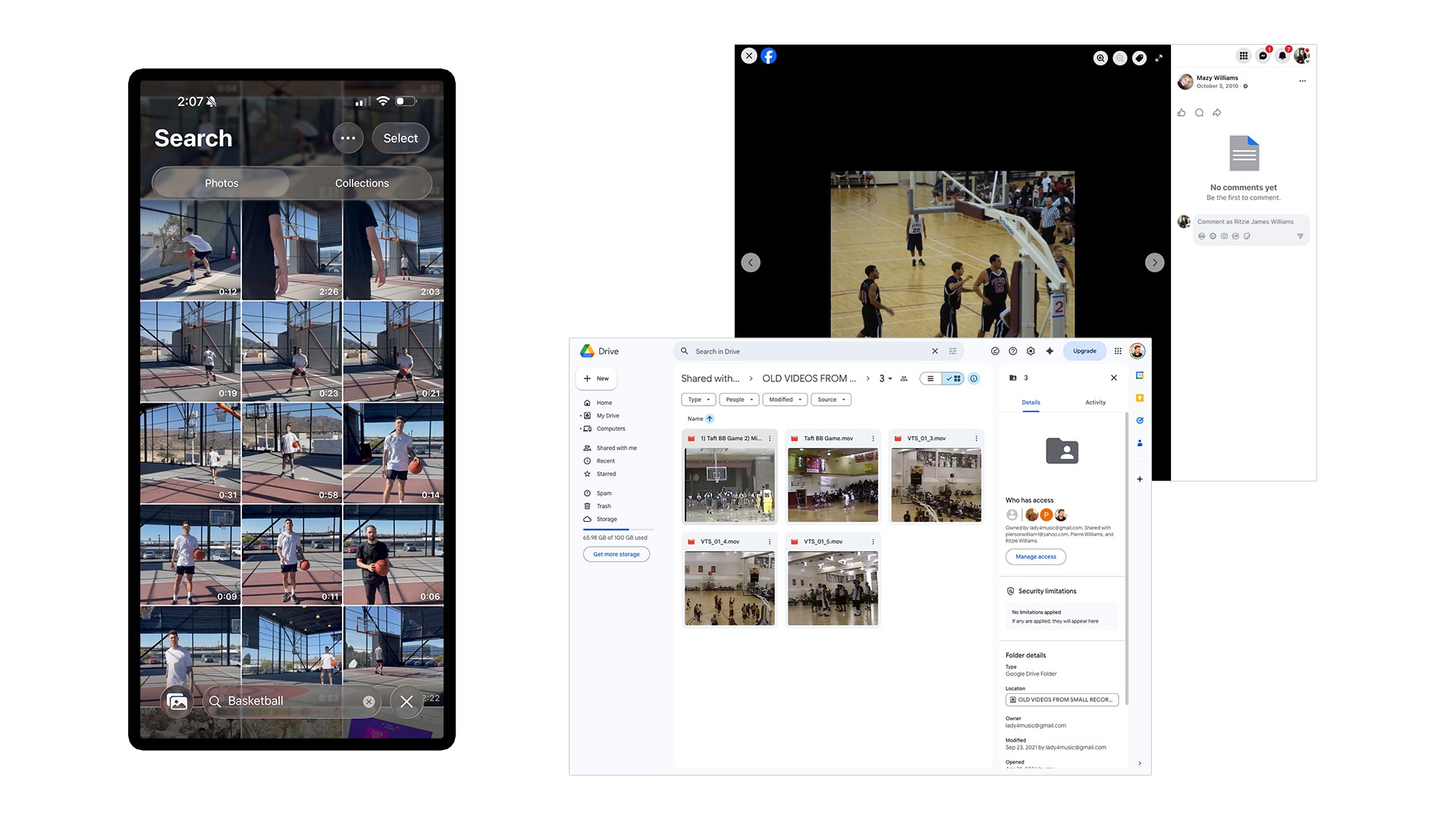
Athletes track their progress across fragmented tools—stats in one place, media in another, and milestones often not captured at all.
There is no unified system that connects performance data with personal context, making it difficult for athletes to reflect on growth or present a complete picture of their journey.
04 - Key Insight
Athletes don’t just want to track performance—they want to tell their story over time.
This insight shifted the product from a stats-focused tool into a structured storytelling system, where performance and narrative are equally important.
05 - Defining the Core System
To support both structure and storytelling, the platform was designed as a set of interconnected layers:
Identity & Profile
A central hub for athlete identity, including personal details, external links, and high-level context.

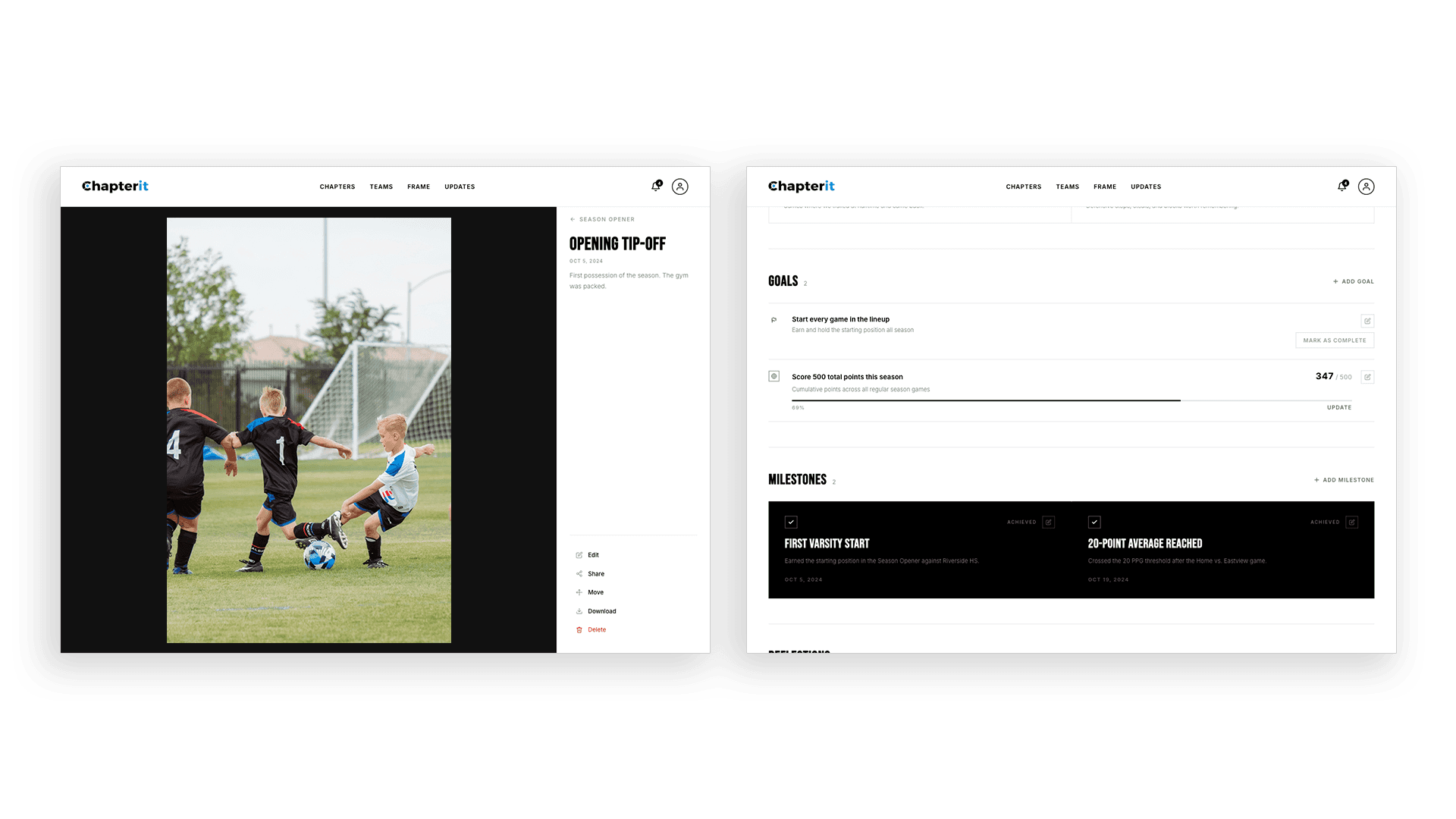
Storytelling Layer
Moments, milestones, goals, and events allow athletes to document key experiences throughout their journey.
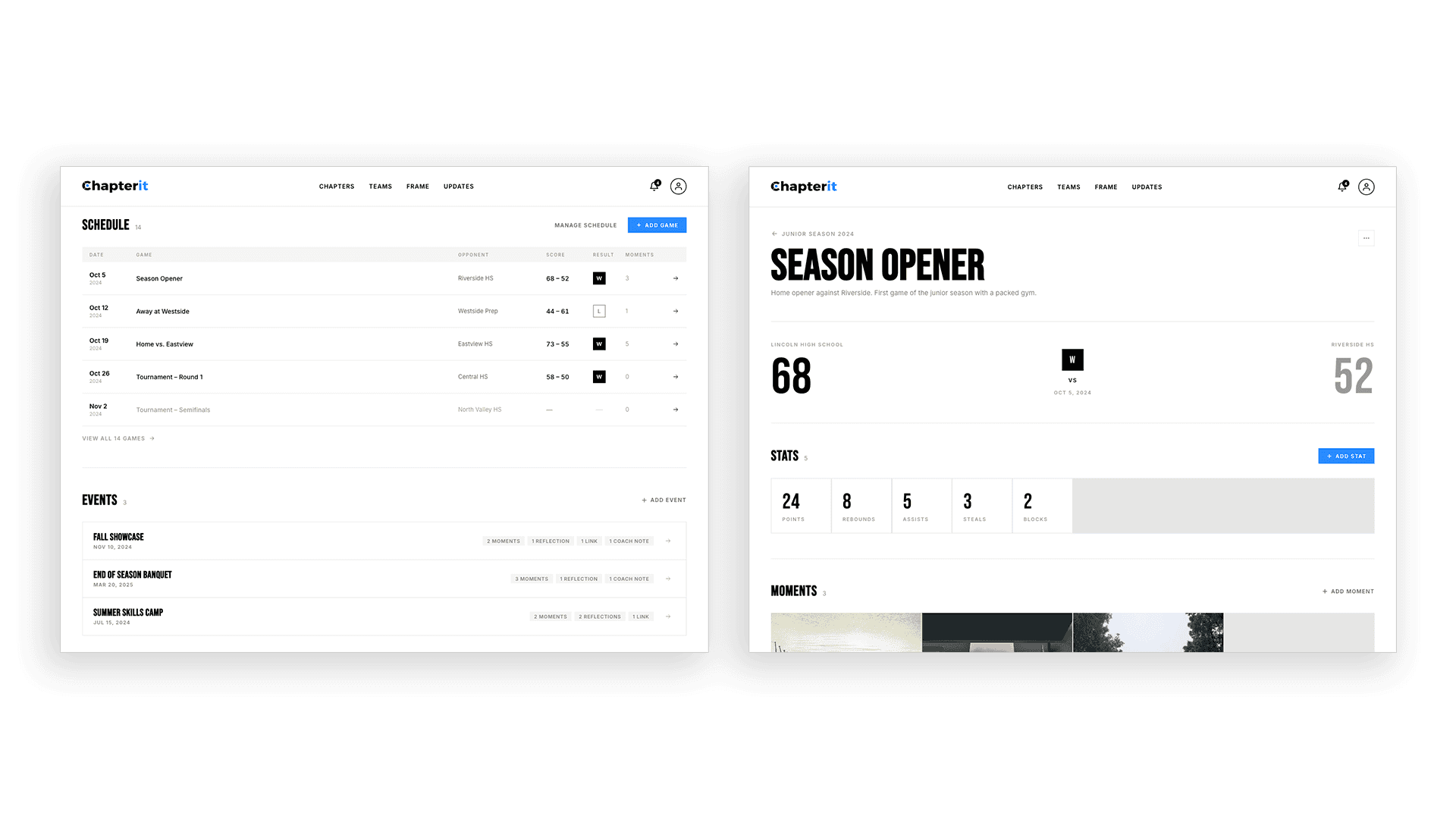
Performance Layer
Games and stats provide a structured view of measurable progress over time.
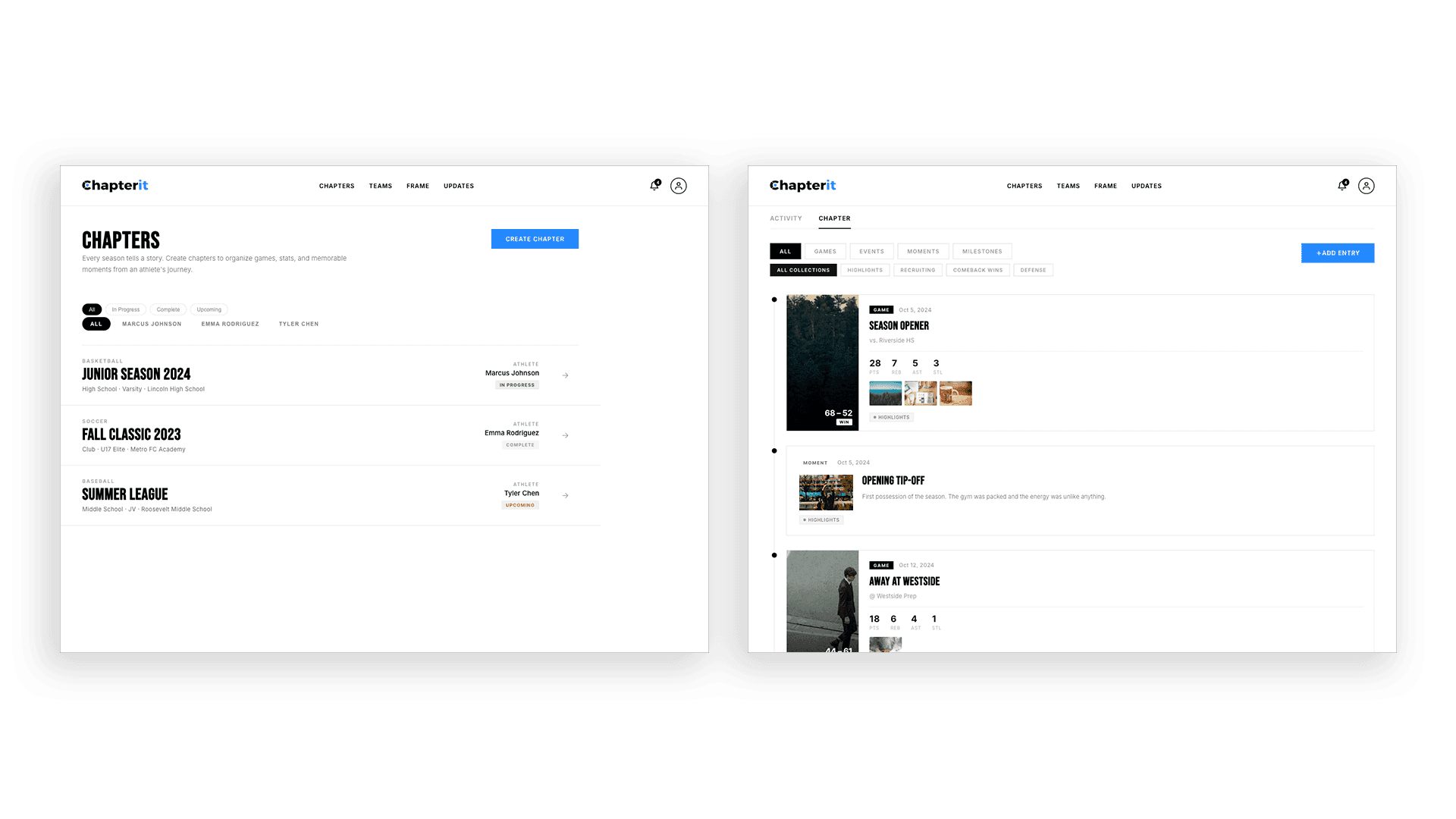
Structure Layer
Chapters and timelines organize content into meaningful phases (e.g., seasons), creating a clear narrative arc.
Network Layer
Team and coach management features enable collaboration and recognition within an athlete’s support system.

06 - Concept Exploration
Early exploration focused on how athletes naturally think about their journey and how that should translate into product structure.
Key directions explored included:
Timeline-first vs. chapter-first organization
Performance-first vs. story-first experiences
Private journaling vs. shareable profiles
These explorations led to a hybrid model where chapters provide structure, and moments provide flexibility, allowing users to capture both structured and spontaneous experiences.
Circle (Future Vision)
A future-facing concept that introduces a centralized layer for communication, updates, and coordination between athletes, coaches, and teams.
Circle extends the platform beyond individual tracking into a connected ecosystem, where development is supported collaboratively rather than in isolation.

07 - Tradeoffs
From Figma to Claude Code
To accelerate development, I transitioned from traditional design workflows into AI-assisted implementation using Claude Code.
Benefits:
Rapid iteration from concept to production
Reduced friction between design and development
Faster validation of ideas
Challenges:
Maintaining visual and interaction consistency
Establishing tighter design constraints within code
This shift required a more integrated approach to design, where thinking and execution happened in parallel.
08 - Outcome
The result was a functional MVP that transforms athlete tracking into a cohesive, story-driven system.
By combining performance data with narrative context, the platform enables athletes to better understand their progress, reflect on their journey, and present a more complete representation of their development.
09 - Whats Next
Future iterations focus on expanding intelligence and automation within the platform:
AI-generated summaries of athlete progress
Automated highlight creation from moments and events
Deeper performance insights connected to narrative milestones
These directions continue to push the platform toward a more intelligent, personalized experience.